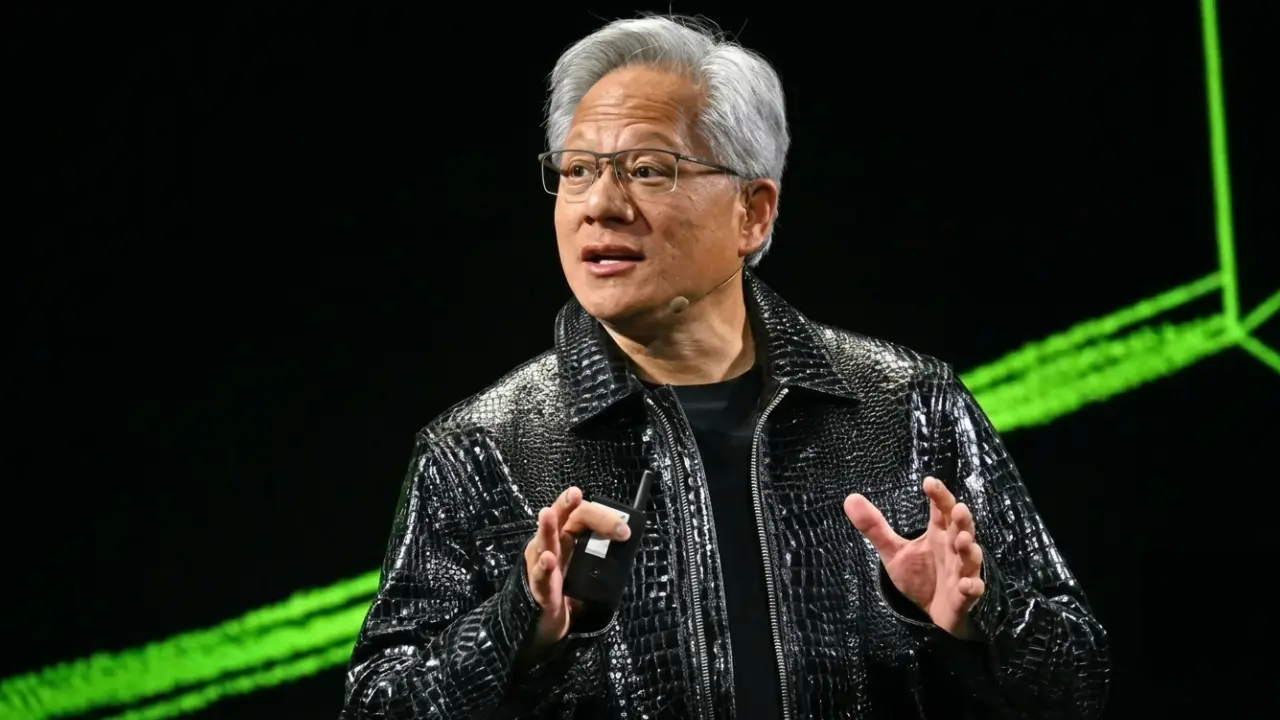
Nvidia’s CEO says the AI boom is just getting started
Nvidia CEO Jensen Huang told reporters in Tokyo this week that the artificial intelligence boom is nowhere near its peak, arguing the current buildout represents only the early stage of a much longer computing cycle.
Huang said major computing shifts typically play out over ten to fifteen years, putting the world at the start of the current AI-driven cycle rather than near its end.
Huang Dismisses Bubble Fears
Speaking to reporters during a visit to Japan, Huang rejected the idea that heavy AI investment is inflating a bubble, saying demand remains strong and infrastructure buildout needs to continue for at least another decade.
He framed the spending as a long-term strategic response to demand rather than speculative excess. The comments followed a volatile stretch for chip stocks.
Nvidia briefly became the first company to reach a $4 trillion market valuation in July 2026, with shares touching an intraday high of $164.42, and Huang had earlier told investors in Seoul that a market pullback was a buying opportunity, not a warning sign.
Rival chipmakers tend to move with Nvidia on these swings, since AMD, Broadcom and other suppliers sit further down the same demand chain.
Huang also pushed back on separate reports of production delays for Nvidia’s next-generation chip platform. He said rumors of delivery slowdowns for the Vera Rubin platform were untrue, and confirmed the line is already in volume production with large shipments on the way.
That matters for the market because chip supply timing has been one of the main swing factors in AI stock pricing this year.
Japan Deal Signals Wider Demand
Nvidia paired the comments with a fresh commercial announcement. The company joined Japan’s government in launching a national physical AI initiative, bringing together manufacturing partners and AI infrastructure builders to develop open foundation models for robotics and industrial applications.
For bank savings rates watchers, the deal is another data point showing AI capital spending is broadening beyond U.S. hyperscalers, which analysts have flagged as one driver of elevated corporate borrowing demand and, indirectly, deposit competition among banks.
What This Means for You
If you hold Nvidia shares or AI-adjacent funds, Huang’s comments are a signal that management still sees years of demand ahead rather than a near-term slowdown, though that view will only be tested by upcoming earnings.
If you’re weighing new positions, remember that a single executive’s confidence is not a guarantee against short-term volatility, and diversified exposure remains the more conservative route into the AI trade.
For a sense of how bank profits are riding this same wave, see how JPMorgan’s record quarter was fueled partly by trading activity tied to exactly this kind of tech-sector momentum.
Source: NVIDIA’s blog



[…] Investors interested in examining long-term growth forecasts can read our overview on the Nvidia CEO bullish outlook to compare long-term technology growth potential against short-term bond […]