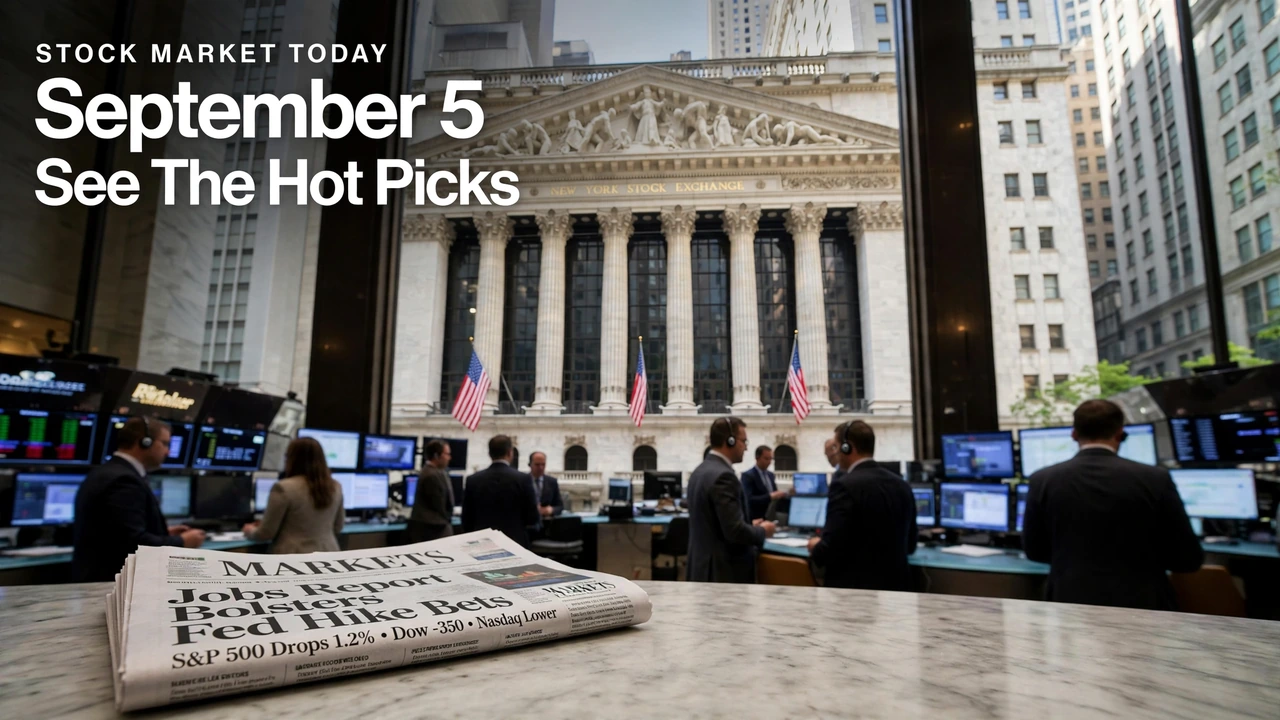
Stock Market Today, Saturday, September 5, 2026: Strong Jobs Report Revives Fed Rate-Hike Risk as Stocks Slip
Wall Street has a new problem heading into the long weekend: the U.S. job market suddenly looks much stronger, giving the Federal Reserve more room to raise interest rates this month.
Stocks are not trading Saturday, September 5, but Friday’s close changed the market setup. The government’s August employment report showed employers added 162,000 jobs, almost three times the 56,000 economists expected. The surprise pushed Treasury yields higher, increased bets on a September Fed rate hike and sent all three major U.S. stock indexes lower.
Friday’s major market moves were:
- S&P 500: down 0.38% to 7,718.41
- Dow Jones Industrial Average: down 0.51% to 53,413.60
- Nasdaq Composite: down 0.29% to 26,506.99
- Philadelphia Semiconductor Index: up 3.4%
- S&P 500 software and services group: down 2.1%
Reuters reported those closing levels in its latest market report. AP’s closing data showed nearly identical moves, with the Russell 2000 bucking the broader decline and gaining about 0.2%.
The reason stocks fell was not that the jobs report showed economic weakness. It showed the opposite.
According to the government’s official jobs report:
- August payroll growth: +162,000
- Unemployment rate: 4.1%, unchanged
- Average hourly earnings: +0.3% from July
- Average hourly earnings: +3.1% from a year earlier
- Labor force participation rate: 61.6%
- June and July payroll revisions: +55,000 combined
The 162,000 increase was also far above the average monthly gain of just 31,000 over the prior 12 months, according to the Bureau of Labor Statistics. Food services and drinking places added 59,000 jobs, local government education added 42,000, and manufacturing added 16,000.
That strength matters because the Fed is already worried about inflation.
The central bank kept its federal funds target unchanged at its July meeting, but the official Fed statement said inflation remained elevated relative to the Fed’s 2% goal. Three policymakers voted for an immediate quarter-point increase at that meeting.
The current Fed range is:
- Federal funds target: 3.50% to 3.75%
- Possible 25-basis-point hike: 3.75% to 4.00%
- Next Fed meeting: September 15–16, 2026
After Friday’s jobs report, short-term interest-rate futures implied about a 62% probability of a rate increase this month, up from roughly 55% before the report, Reuters reported. Another calculation later in Friday’s session put the probability near 58%, showing that expectations were still moving as traders repositioned.
That is a major shift from Thursday, when stocks had rallied after Fed Governor Christopher Waller suggested rates could remain unchanged if inflation continued to cool. Investors following the earlier Thursday market now face a very different policy calculation.
Bond markets reacted quickly. Official Treasury data showed:
- 2-year Treasury yield: 4.37%, up from 4.34% Thursday
- 10-year Treasury yield: 4.78%, up from 4.77%
- 30-year Treasury yield: 5.24%, down slightly from 5.25%
The two-year yield is especially important because it tends to react strongly to changes in expectations for Fed policy.
Higher yields can pressure stocks because they raise borrowing costs and make bonds more competitive with equities. Growth stocks can be especially sensitive because higher rates reduce the present value investors place on profits expected far into the future.
Still, Friday was not a broad technology collapse. Semiconductor stocks gained strongly even as the major indexes fell. Investors who followed this week’s stock movers and stocks watchlist have seen unusually large differences between sectors and individual companies.
Among Friday’s biggest moves:
- Lululemon: down 17.4% after cutting its full-year forecasts
- Adobe: down 6.7% after announcing a CEO change
- Fair Isaac: down 16.7%
- Equifax: down 6.4%
- TransUnion: down 5.9%
The next major test is inflation. Fed officials meet September 15–16, and Reuters reported that next week’s consumer and producer inflation readings could decide whether policymakers raise rates or stay on hold.
That means the market’s focus has moved from one question, whether the labor market is weakening, to a harder one: whether strong hiring, elevated inflation and high energy costs give the Fed enough reason to tighten again.
U.S. markets are closed Monday for the Labor Day holiday, so regular trading resumes Tuesday, September 8. When Wall Street reopens, Treasury yields, oil prices and expectations for the September Fed decision are likely to remain at the center of the market.
For investors, Friday’s message was simple: good economic news has once again become a potential interest-rate problem.



[…] Street was already dealing with that problem before the holiday. Friday’s market selloff followed a surprisingly strong August employment […]