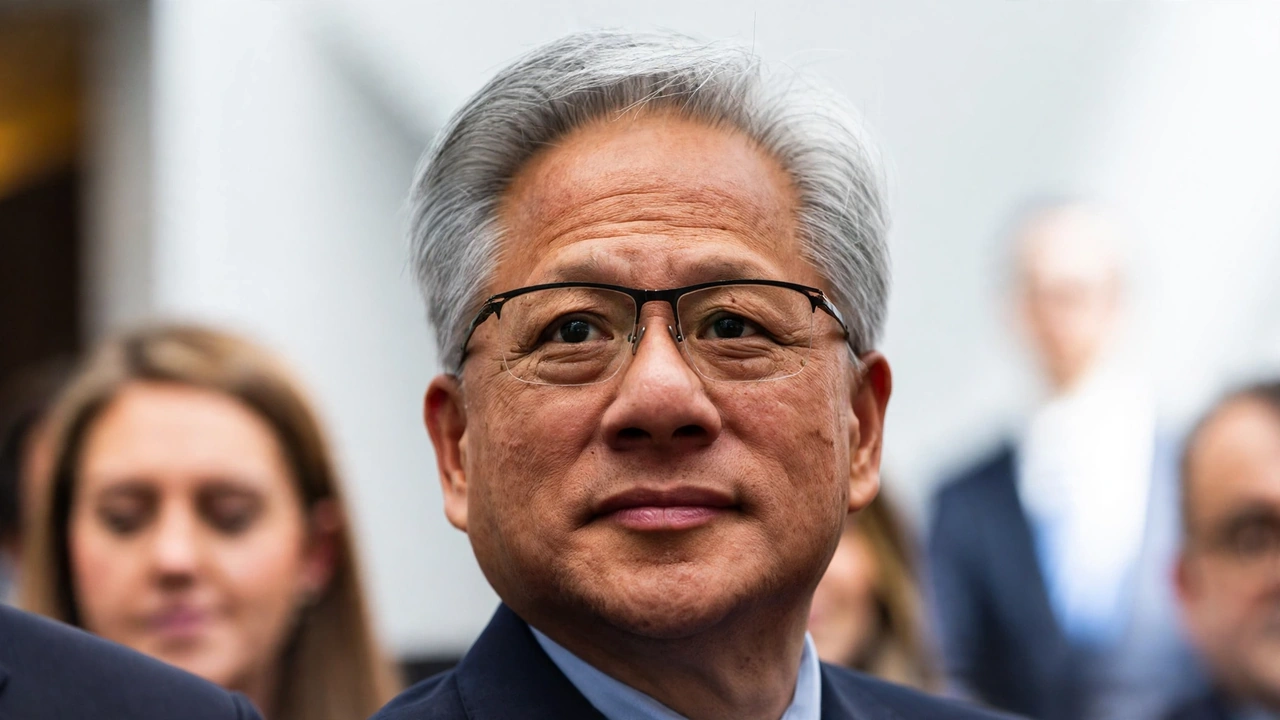
Nvidia Board Investigates Report of Spying Targeting Jensen Huang
Nvidia’s board of directors has launched an independent investigation following reports that CEO Jensen Huang was targeted by a foreign intelligence operation, bringing national security concerns into focus at one of the world’s most important artificial intelligence companies.
The investigation follows allegations involving Huang’s relationship with a Chinese business executive suspected of providing information to Beijing. Nvidia said it has no reason to believe U.S. national security or company secrets were compromised, while confirming that Huang will cooperate with the review.
The investigation was announced on Sunday, November 8, 2026, as the chipmaker faced growing questions about its leadership, customer relationships and the protection of advanced AI technology. The official board statement confirmed that independent directors, assisted by outside legal counsel, will oversee the inquiry. The announcement does not establish that espionage occurred or that Huang knowingly disclosed sensitive information.
What Nvidia Confirmed
Nvidia said the investigation was prompted by recent reporting that Huang, the company’s founder and chief executive, had been the target of a foreign intelligence effort. Its board has established an independent review process to examine the information surrounding those allegations. The company emphasized that protecting U.S. national and economic security remains a central responsibility to Nvidia and its shareholders.
The board also expressed confidence in Huang and Nvidia’s leadership team, an important distinction from announcing disciplinary action or a management change. Huang has committed to cooperating with the investigation, and the company said further updates would be provided when appropriate. No findings establishing a compromise of Nvidia’s proprietary information were announced alongside the investigation.
Allegations Behind Investigation
The controversy centers on reported connections between Huang and Alice Huang, a Chinese businesswoman formerly associated with Singapore-based technology company Megaspeed. According to reporting by major news organizations, U.S. authorities investigated concerns that Alice Huang was connected to Chinese intelligence and had access to the Nvidia chief executive.
Those claims remain allegations, and the company’s investigation has not publicly established that she conducted espionage against Nvidia. Mega speed is significant because of its business involving Nvidia’s advanced AI processors, which are among the technologies Washington has sought to prevent from reaching restricted Chinese customers.
Questions about the company’s commercial activities have therefore become intertwined with concerns about the security of Nvidia’s technology and leadership. Nvidia has previously maintained that its customer relationships involve ordinary business interactions rather than the disclosure of classified information or sensitive trade secrets.
Huang Addresses Relationship
In a message to Nvidia employees, Jensen Huang acknowledged that he had been unfaithful to his wife and apologized for his conduct. He accepted responsibility for the personal harm caused and acknowledged that his actions had fallen short of the expectations placed on him as Nvidia’s leader. The admission added a personal dimension to the controversy, but it does not independently establish the allegations of foreign intelligence activity.
Huang also expressed his commitment to Nvidia and to protecting U.S. national security. His cooperation with the board’s investigation will be important in determining whether the reported relationship created any security vulnerabilities or conflicts of interest. The questions facing directors extend beyond his personal conduct to the adequacy of safeguards surrounding the company’s leadership and sensitive commercial information.
Why National Security Matters
Nvidia occupies an unusually important position in the global race to develop artificial intelligence, supplying advanced processors used to train and operate increasingly powerful AI systems. Its technology supports major cloud infrastructure, scientific research and commercial AI applications, making the security of its operations a matter of interest beyond ordinary corporate governance. The company’s AI outlook is closely connected to demand for these processors and its ability to serve customers across international markets.
Nvidia’s importance extends beyond protecting its technology and leadership. The company is also approaching a major earnings test as investors examine whether demand for advanced AI processors can sustain its rapid growth. Its shares closed November 6 at $186.64, following a volatile week for technology stocks, with the upcoming results adding another dimension to the stocks to watch ahead of Monday’s trading session. The board investigation introduces a separate governance concern that investors will need to assess alongside Nvidia’s financial performance.
U.S. export restrictions have sought to limit China’s access to certain advanced computing technologies, including some Nvidia products. The Bureau of Industry and Security administers export controls covering sensitive technologies and transactions that may affect U.S. national security. An investigation involving possible foreign intelligence activity therefore raises questions about information security, customer oversight and corporate access controls.
Still, the existence of a foreign intelligence allegation should not be confused with proof that restricted technology or confidential information reached China. Nvidia’s board has explicitly said it has no reason to believe that national security or company secrets were compromised. That distinction remains central to assessing the significance of the investigation.
Investor Questions Grow
For Nvidia shareholders, the investigation introduces a potential governance risk at a company whose growth and market position are closely associated with Huang’s leadership. Investors must consider whether the board can establish clear facts, protect sensitive information and maintain confidence in the company’s management. The announcement alone does not demonstrate an operational disruption or a financial loss.
Nvidia shares are also exposed to broader questions about the durability of AI investment, competition among chipmakers and restrictions on international sales. Those pressures affect the company’s valuation independently of the current investigation, making it important to distinguish business fundamentals from developments involving its chief executive. The broader AI chip market remains sensitive to changes in demand, expectations and technology policy.
The timing of the investigation could increase investor attention around Nvidia’s upcoming financial disclosures and management commentary. However, any claim that the investigation caused a particular stock-price movement would require verified trading data and evidence linking the movement to the announcement. A decline or rally in Nvidia shares should not automatically be attributed to the controversy without accounting for wider market conditions.
What Happens Next
The independent committee will examine available information with assistance from outside legal counsel, although Nvidia has not publicly provided a detailed timetable for completing the review. The investigation could clarify whether any sensitive information was exposed, whether internal safeguards were sufficient and whether additional corporate governance measures are needed. Its scope and findings will matter more than speculation about possible consequences for Huang’s position.
Congressional scrutiny could also develop alongside the company’s internal investigation because advanced semiconductor technology occupies a central place in U.S.-China competition. Questions about customer relationships, technology transfers and intelligence risks may attract attention from lawmakers responsible for overseeing national security and export restrictions. Any separate government proceedings would need to be evaluated on their own evidence rather than treated as proof of the allegations.
For now, the confirmed facts are narrower than the most serious allegations: Nvidia has opened an independent investigation, Huang has pledged to cooperate, and the board has expressed confidence in his leadership. The company has not announced evidence that its secrets or U.S. national security were compromised. The next significant development will be whether the investigation produces verified findings that change that assessment.