Oil Prices and Gas Prices Today, September 3: Brent Nears $100 as Iran Conflict Pushes Gas to $4.14
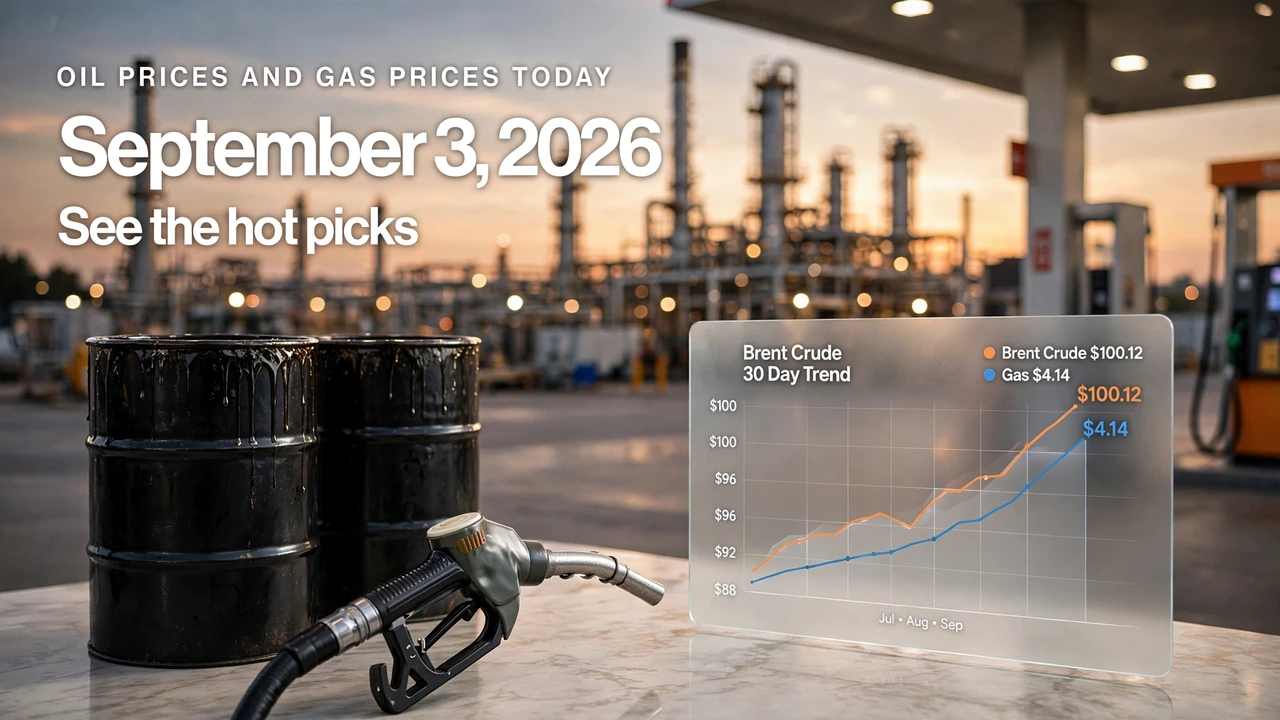
Oil prices jumped to fresh six-week highs Thursday as renewed U.S.-Iran fighting and growing risks around the Strait of Hormuz put global energy supplies back under pressure. Brent crude moved above $97 a barrel during the session, bringing the global benchmark within reach of $100, while U.S. gasoline prices climbed to about $4.14 a gallon just before the Labor Day weekend.
For American drivers, the impact is becoming harder to ignore. AAA reported that the national average price for regular gasoline reached $4.1436 a gallon on September 3, up from $4.1203 Wednesday and $4.0997 one week earlier. It was $3.1903 a gallon a year ago.
Today’s main energy prices include:
- Brent crude: about $97.29 a barrel during Thursday trading, up $1.66, or 1.7%.
- WTI crude: about $93.04 a barrel, up $2.03, or 2.2%.
- Regular gasoline: $4.1436 a gallon nationwide.
- Mid-grade gasoline: $4.6543 a gallon.
- Premium gasoline: $5.0335 a gallon.
- Diesel: $5.7832 a gallon.
- E85: $3.1370 a gallon.
The latest move in crude followed new U.S. strikes on Iran and renewed warnings from Israel, increasing fears that the conflict could further disrupt oil moving through the Middle East. Reuters reported that both Brent and WTI touched six-week highs and were headed for a fourth straight daily gain.
Read Next: Oil Prices Today, September 3, 2026: Brent, Iran and Hormuz
The biggest concern remains the Strait of Hormuz. It is one of the world’s most important energy shipping routes, and traffic has already been running well below normal levels.
Only six commodity vessels crossed the strait Wednesday, according to shipping data cited by Reuters. That was down from 11 a day earlier and below the recent 10-day average of roughly 13 vessels. Iran has also added ships to a list of vessels that it says could face fines, seizure or detention if they do not follow its rules.
That means traders are not simply reacting to military headlines. They are pricing in the risk that fewer tankers may be able or willing to move crude and fuel through the region.
Investors can follow the latest changes in the oil market, where the supply risks around Iran and Hormuz remain the main driver of daily price swings.
Gasoline prices are now showing those pressures at the pump. AAA said Thursday that Labor Day travelers are facing the highest gasoline prices ever recorded for this time of year, with the national average around $4.14 and roughly four cents higher than a week ago. AAA directly linked the recent rise to continued volatility around Hormuz and crude prices in the $90-a-barrel range.
Federal energy data also show how elevated prices have become. The U.S. Energy Information Administration’s weekly average for regular gasoline was $4.071 a gallon for the week ending August 31, compared with $4.085 a week earlier. The Gulf Coast remained the cheapest major region at $3.618, while other parts of the country were well above $4.
Higher oil matters well beyond gasoline. Expensive crude can lift diesel, airline fuel and transportation costs, which can eventually feed into the price of goods and services. That is why energy prices are also becoming important for interest-rate expectations.
Federal Reserve Governor Christopher Waller said Thursday that he could support keeping rates unchanged in September if inflation continues to ease, but he also warned that persistent inflation, including pressure from higher oil prices, could change the outlook. Wall Street nevertheless moved higher after his comments, with investors also looking toward Friday’s jobs report.
The broader stock market is therefore watching two risks at the same time: whether the Iran conflict pushes crude above $100 and whether higher energy costs make the Federal Reserve more cautious about inflation.
There is some supply relief. Iraq increased oil exports to around 2.34 million barrels a day in August from about 1.35 million in July, according to Iraqi energy officials cited by Reuters. But the immediate direction of oil remains heavily tied to Hormuz traffic, military developments and whether the latest escalation spreads further.
For U.S. drivers, the most important number is now simple: regular gasoline is above $4.14 nationally and rising again. If Brent moves through $100 and stays there, pressure on fuel prices could continue. If tensions ease and shipping through Hormuz improves, crude prices could also retreat quickly.